
Biography of Ishwar Chandra Vidyasagar: Explore the life and contributions of Ishwar Chandra Vidyasagar, a 19th-century Indian educator and social reformer. Learn about his advocacy for women’s rights, educational reforms, and his role in modernizing the Bengali language in this comprehensive biography.
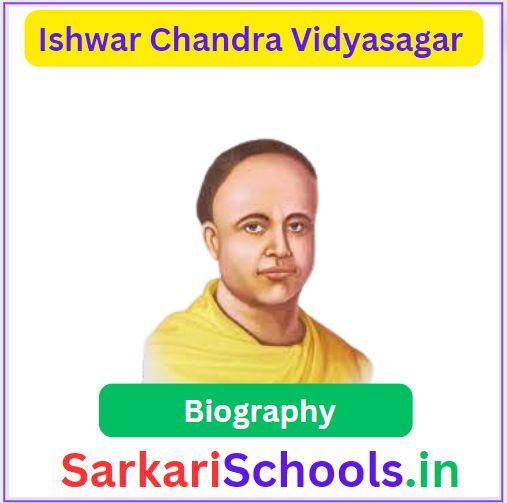
Biography of Ishwar Chandra Vidyasagar
| Born | September 26, 1820 |
|---|---|
| Name | Ishwar Chandra Bandopadhyay |
| DOB | 26 September 1820 |
| Birthplace | Birsingha, Bengal Presidency, India |
| Occupation | Educator, social reformer, author |
| Language | Bengali |
| Nationality | Indian |
| Alma Mater | Sanskrit College (Calcutta) |
| Notable Works | Advocate for widow remarriage, women’s education, modernizing Bengali language, Age of Consent Act |
| Spouse | Dinamayee Devi |
| Children | 1 (Narayan Chandra Bandopadhyay) |
| Significant Achievements | – Championed Hindu widow remarriage |
| – Advocated against child marriage | |
| – Simplified and modernized Bengali prose | |
| – Rationalized and simplified Bengali alphabet | |
| Legacy | – Government of Jharkhand named a block after him |
| – Remembered as a pioneering social reformer and scholar | |
| – Posthumously honored as Companion of the Indian Empire (CIE) in 1877 | |
| Died | July 29, 1891 |
Ishwar Chandra Vidya Sagar’s life and work continue to inspire and influence Indian society, particularly in the areas of women’s rights, education, and language modernization.
Biography of Ishwar Chandra Vidyasagar in English
Ishwar Chandra Vidya Sagar Biography
Ishwar Chandra Vidya Sagar, born as Ishwar Chandra Bandopadhyay, was a remarkable Indian educator, social reformer, and author who left an indelible mark on the 19th century. His life’s work revolved around empowering women, modernizing the Bengali language, and advocating for essential social reforms. This biography provides a comprehensive overview of his life and contributions.
Early Life and Education:
Early Life and Education: Ishwar Chandra Vidya Sagar was born on September 26, 1820, in Birsingha, a village in the Bengal Presidency, which is now part of West Bengal, India. He was born into a devout Bengali Hindu Brahmin family. At a young age, Vidya Sagar demonstrated an insatiable thirst for knowledge.
At the tender age of nine, he left his hometown for Calcutta, where he found shelter in the home of Bhagabat Charan. Here, he discovered an environment conducive to learning, and he formed strong bonds with Bhagabat’s family, particularly with Raimoni, the youngest daughter, whose affectionate care deeply influenced his later commitment to uplifting women’s status.
Ishwar Chandra’s determination to acquire knowledge was evident in his studying under streetlights, as his family could not afford a gas lamp. Despite financial hardships, he excelled academically, winning scholarships to support his education. He graduated from Sanskrit College in Calcutta in 1841, mastering subjects like Sanskrit Grammar, Literature, Dialectics, Vedanta, Smriti, and Astronomy.
At the age of fourteen, in accordance with the customs of the time, Vidya Sagar married Dinamayee Devi, and they had a son named Narayan Chandra Bandopadhyaya.
- Ishwar Chandra Vidya Sagar was born on September 26, 1820, in Birsingha, Bengal Presidency, which is now in West Bengal, India.
- He hailed from a Bengali Hindu Brahmin family and displayed a keen interest in learning from a young age.
- At the age of nine, he moved to Calcutta (now Kolkata) and lived with Bhagabat Charan’s family, where he found a supportive environment for his education.
- Despite financial constraints, Vidya Sagar excelled academically and received numerous scholarships to support his studies.
- He completed his education at Sanskrit College in Calcutta in 1841, earning degrees in various subjects, including Sanskrit Grammar, Literature, Dialectics, Vedanta, Smriti, and Astronomy.
- He married Dinamayee Devi at the age of fourteen, and they had one son, Narayan Chandra Bandopadhyaya.
Career and Contributions:
Ishwar Chandra Vidya Sagar’s career was marked by a passion for education and a commitment to social reform. He embarked on his professional journey as the head of the Sanskrit department at Fort William College in Calcutta in 1841. Later, he took up the position of Assistant Secretary at Sanskrit College in Calcutta.
In 1849, due to disagreements with the College Secretary regarding proposed educational reforms, Vidya Sagar resigned from Sanskrit College and returned to Fort William College as a head clerk.
However, it was Vidya Sagar’s tireless efforts in the realm of social reform that truly defined his legacy. He was a staunch advocate for women’s rights, specifically Hindu widow remarriage. Despite fierce opposition and counter-petitions, his relentless campaign resulted in the passing of the Hindu Widows’ Remarriage Act in 1856.
He also fought against the practice of child marriage, contributing to the Age of Consent Act of 1891, which raised the minimum age for marriage to 12 years. His advocacy for female education led to the establishment of the Hindu Female School, later known as the Bethune Female School.
Vidya Sagar’s contributions extended beyond social reform. He played a pivotal role in simplifying and modernizing Bengali prose and rationalizing the Bengali alphabet. He introduced punctuation marks to the Bengali language, revolutionizing its written form.
- Vidya Sagar began his career as the head of the Sanskrit department at Fort William College in Calcutta in 1841.
- He later joined the Sanskrit College as an Assistant Secretary but faced conflicts with the College Secretary over proposed changes to the education system.
- In 1849, Vidya Sagar resigned from Sanskrit College and returned to Fort William College as a head clerk.
- Vidya Sagar is best known for his social reform efforts, particularly his advocacy for the rights and welfare of women.
- He played a pivotal role in championing Hindu widow remarriage, despite strong opposition. His efforts led to the passing of the Hindu Widows’ Remarriage Act in 1856.
- He also worked against child marriage and contributed to the Age of Consent Act of 1891, which raised the minimum age for marriage to 12 years.
- Vidya Sagar was a strong advocate for female education and played a role in the establishment of the Hindu Female School, later known as the Bethune Female School.
- He worked to simplify and modernize Bengali prose, rationalized and simplified the Bengali alphabet, and introduced punctuation marks to the Bengali language.
Later Life and Legacy:
In his later years, Ishwar Chandra Vidya Sagar settled in Karmatar, a village in the Santhal Pargana region of what is now Jharkhand. Here, he continued his dedication to education and social upliftment. Vidya Sagar established a girls’ school, a night school for adults, and a free homeopathic clinic to provide healthcare to the underprivileged tribal population.
After his passing, his residence in Karmatar, known as Nandan Kanan, was preserved. A girls’ school and clinic continued to operate in his memory.
The Government of Jharkhand honored Vidya Sagar’s legacy by naming a block in Jamtara district as Ishwar Chandra Vidyasagar Block.
Ishwar Chandra Vidya Sagar’s life and work left an indelible mark on Indian society. His tireless efforts in advocating for women’s rights, education, and language modernization continue to inspire generations. He was posthumously recognized as a Companion of the Indian Empire (CIE) in 1877. Today, he is remembered as a pioneering social reformer and scholar whose impact on Indian history and culture endures. His legacy reminds us of the transformative power of education and the importance of challenging societal norms for the greater good.
- Ishwar Chandra Vidya Sagar spent a significant portion of his later life in Karmatar, a village in the Santhal Pargana region of present-day Jharkhand.
- During his time in Karmatar, he established a girls’ school, a night school for adults, and a free homeopathic clinic to provide medical care to the tribal population.
- After his death, his house in Karmatar, known as Nandan Kanan, was preserved, and a girls’ school and clinic continued to operate in his memory.
- The Government of Jharkhand named a block in Jamtara district as Ishwar Chandra Vidyasagar Block in his honor.
- Ishwar Chandra Vidya Sagar was highly regarded for his contributions, and he was posthumously recognized with the title of Companion of the Indian Empire (CIE) in 1877.
- He is remembered as a pioneering social reformer and scholar and continues to be a revered figure in Indian history and culture.
Vidya Sagar’s work in the field of social reform, education, and language modernization had a lasting impact on the society and culture of his time and continues to influence contemporary Indian thought and progress.
Biography of Ishwar Chandra Bandopadhyay
Extra Tips 4 Extra Marks :
Practice Essay Writing Online
Biography of Ishwar Chandra Vidyasagar Biography of Ishwar Chandra Vidyasagar Biography of Ishwar Chandra Vidyasagar
up board or up scert text books की सभी कक्षाओं के सभी विषयों के सोलूशन्स के लिए sarkarischools.in वेबसाइट पर आपका स्वागत है।
UP BOARD BOOKS SOLUTION 1-8
Solution For Class 8 Solution For Class 7 Solution For Class 6 UP Board Solution For Class 5 UP Board Solution For Class 4 Solution For Class 3 Solution For Class 2 Solution For Class 1
यहां सभी विषय के ऑनलाइन टेस्ट(Online Test) / क्विज़(Quiz) / मॉक टेस्ट(Mock Tests) / टेस्ट सीरीज(Test Series) / परीक्षा(Exam) / प्रश्न(Questions) प्रदान किये गए हैं। ये Quiz , Mock Test Series आपको विभिन्न परीक्षाओं मे सफलता दिलाने में सहायक सिद्ध होंगे।